
Recency bias will ensure that most people you talk to who watched Game 7 of the 2025 World Series will tell you it was the best game they’d ever seen, capping off the best World Series they’d ever seen. The drama was palpable from the onset, and it’s hard to argue the game’s, and series’, place among the all-time best.
Of course, if you’re a Dodgers fan (you know, the ones who suffered through the Frank McCourt days and did not just recently hop aboard the Shohei Ohtani bandwagon), you are ecstatic. How could you not be? Your team is baseball’s first dynasty in a quarter-century and primed to three-peat, and maybe more. A lockout may be looming in 2027, but LA is on top of the baseball world right now.
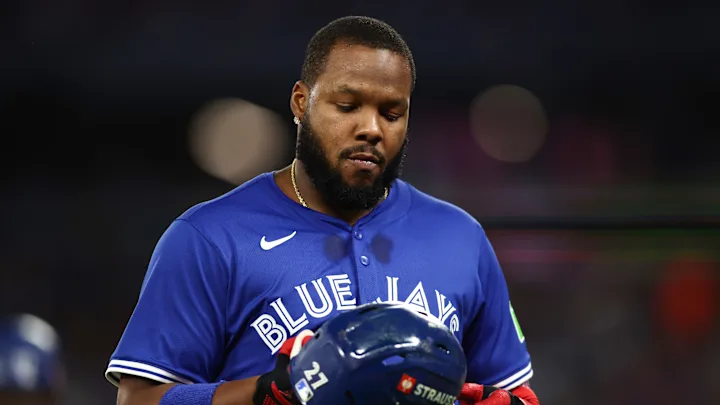
But what about the other side? How about the Toronto Blue Jays, who refused to accept the “underdog” status or being “David” to the Dodgers’ “Goliath?” How about a worst-to-first team that may now be just as likely to finish last again next year as they are to return to baseball’s biggest stage?
You see, it isn’t just the fact that the Jays were on the cusp of their first title in 32 years (the same exact drought the Dodgers ended in 2020, despite the asterisk attached). It’s the fact that this opportunity may not come again, and that there were oh-so-many chances to put the game away and ensure that they would be the ones popping the champagne in their home clubhouse.
Let’s look at the stages of missed opportunity that led to the five stages of grief Toronto fans would be feeling afterwards:
Springer’s miscue
Much like Bo Bichette’s bonehead baserunning mistake in Game 3, when he mistakenly took off for second thinking Daulton Varsho had walked (he really had, but the call went LA’s way), Springer either missed a sign for a steal or also mistakenly assumed Vladimir Guerrero Jr. had taken ball four. He was thrown out easily, and a first-inning threat was extinguished. Naturally, the first two hitters would reach the next inning. Which leads us to…
Bichette’s knee costs Toronto a run
Perhaps the easiest run-squandering moment of the game to miss was this one in the second inning. After a walk and a single to start the frame, Ohtani appeared close to wiggling out of trouble yet again. But with two outs, postseason hits leader Ernie Clement singled into right-center, a hit that easily would have scored a healthy Bichette. Instead, he held up at third, loading the bases with two outs for a struggling Andres Gimenez. The No. 9 hitter struck out swinging to leave the game scoreless.
Dodgers dodge trouble after fracas
After the dust cleared following a benches-clearing non-melee on a hit by pitch of Gimenez by Justin Wrobleski, Toronto had two on with one out and slumping Nathan Lukes coming up for a lefty-lefty matchup. Rather than pinch-hit Davis Schneider in this spot instead of in the eighth inning as he did, John Schneider let Lukes hit, and he promptly struck out. Tyler Glasnow came on in relief of Wrobleski and Guerrero flew out to end the inning.
Top of the order can’t add on
When your slumping No. 9 hitter gives you an insurance RBI double with no one out, you simply must capitalize. And yet after Gimenez did just that in the sixth to make it 4-2, Springer, Lukes, and Guerrero were all retired in order to end the inning.
Deja vu in the eighth
It was the same story in the eighth against Blake Snell, when Clement doubled to start the frame. He never budged from second, because Gimenez, after showing bunt, lined out sharply to Muncy. Springer and Schneider, pinch-hitting for Lukes, struck out to end the inning, leaving the lead at just one headed to the ninth.
The Ohtani effect aids Rojas
Jeff Hoffman, who had been shaky at times during the regular season but stellar in the postseason, had retired Tommy Edman the end the eighth and started the ninth with a strikeout of Enrique Hernandez. That meant that Ohtani, now in the on-deck circle, would only be the tying run so long as Hoffman could retire No. 9 hitter Miguel Rojas. The feeling was that no matter what, you could not walk Rojas with Ohtani on deck. Make a good pitch and ensure that Ohtani can’t beat you. Instead, Hoffman fell behind Rojas 3-2, and one pitch later hung a slider because he did not want to walk him. Rojas made him pay with a game-tying home run, and it felt like all the air went out of Rogers Centre.
One more golden chance
With the game tied and the momentum completely in LA’s favor, it felt like the Jays needed to score in the bottom half of the ninth or the game would slip away. The heart of the order was due up against Snell, and he immediately fell behind Guerrero 3-0. Rather than take a pitch to potentially draw a leadoff walk, Guerrero swung at a pitch that easily could have been called ball four and hit a deep fly ball to center that gave the crowd a rise but fell short of the warning track. Had Guerrero gotten on base, Bichette singled and Game 6 goat Addison Barger walked, which would have loaded the bases with no one out. Game 6 starter Yoshinobu Yamamoto entered and hit the first batter he faced, Alejandro Kirk. Instead of that winning the game, it brought up probably Toronto’s coldest hitter, Daulton Varsho, with a chance to play hero. Varsho bounced a ball up the middle, but Rojas, carrying the good mojo of his game-tying bomb, slid to make the stop and got the ball to catcher Will Smith just ahead of pinch-runner Isiah Kiner-Falefa’s slide. Adding to the agony was that fact that Smith took his toe off the plate for a split second and got it back on by a mere eyelash just in time for the force out.
That brought up Clement with two outs with a chance to cap his record-setting postseason (30 hits) with a Joe Carter-esque moment. Clement hit a drive to deep left-center, as both Kike Hernandez and just-inserted-into-the-gamae Andy Pages (for his arm, not necessarily his glove) were planning shallow to prevent a bloop single. Both outfielders got on their horses, and Blue Jays fans thought “this is it.” Pages collided with Hernandez, which almost always results in the ball hitting the ground. Instead, Pages hung on to the ball and the World Series, and it was yet another devastating moment for the Blue Jays in a game that they felt already should have been over.
Smith strikes again… of course with two outs
The Dodgers have been the kings of two-out runs since their title run in 2020, devastating opponents with backbreaking hits. Shane Bieber came on in the 11th, and retired the first two hitters of the inning, Rojas and Ohtani. Usually getting past Ohtani merits a sigh of relief, but Smith — one of only two players in LA’s lineup that was actually drafted by the team — has a knack for the dramatic, and came through with a go-ahead home run that almost felt inevitable after all the missed chances by Toronto.
One more bout of false hope
Speaking of inevitability, a Toronto team that had fought so hard all year could not go down with a wimper. Guerrero started off the 11th with a ringing double, putting a runner in scoring position with no outs for the fifth (!) time in the game. Toronto had failed to score that runner four out of five times (Gimenez’s RBI double in the sixth was the lone exception), but there was no margin for error this time.
Bichette’s spot in the order was due, but he had been lifted for pinch-runner Kiner-Falefa in the ninth. That move already had negative consequences, as Kiner-Falefa barely took a secondary lead on Varsho’s grounder up the middle before being thrown out at home by inches. Now, a spot where Bichette could play hero shifted to a sacrifice bunt to get the tying run to third with one out — a scenario where Toronto had failed just two innings earlier.
After the sacrifice, hard-hitting Barger was due up, but it was obvious the Dodgers were going to pitch around him. Yamamato carefully “unintentionally intentionally walked” Barger to set up the double play with the slow-footed Kirk. Once again, the moment was there for the eager Jays fans to erupt. A game that felt like it was in Toronto’s hands simply could not slip away after starting with a 3-0 bang.
But this is Yamamoto, the superhuman pitcher taking on the role of the entire Dodgers bullpen one day after throwing 96 pitches. The rest is history, as Kirk’s bat — and Toronto’s World Series hopes — shattered on a 6-4-3 double play.
Just like that, a title 32 years in the making, a parade and party like none other, and a final chapter in a worst-to-first story they’d be talking about for eternity north of the border were all snatched away by a Dodgers repeat, the first in MLB in a quarter-century.
“Shock” is a term that gets thrown around quite a bit, but if you were rooting for the guys up north, you will never experience a closer feeling.
Renowned baseball writer Jeff Passan had penned during the Brewers-Dodgers NLCS that the importance of the haves-against-have-nots could not be understated in the upcoming labor talks. A Dodgers repeat was bound to fan the flames about the need for a salary cap. And while the Blue Jays are hardly a “little-engine-that-could” small-market franchise, the screams grow louder.
That said, this was an incredible run by Toronto, but unfortunately, people forget teams that don’t win titles a heck of a lot quicker than the ones who do. Losing a World Series is always tough. Losing in seven games is even tougher. But nothing can compare to the pain of all the “what-ifs” that the Blue Jays and their starving fanbase experienced over four hours on the first day of November.
More than any other team sport, baseball can be cruel to no end. The intensity of every pitch outweighs any plays or possessions in other sports. NFL playoff games are one-and-done, but there is nothing like a winner-take-all game in baseball. Needless to say, this one is going to hurt for a long time unless somehow the Blue Jays can channel their inner-2015 Royals (who ironically outplayed the Jays for a pennant that year) and turn a Game 7 loss into a championship 12 months later.
Be the first to comment on "Breaking Down Game 7 of the World Series From the Losing Side: Torture, Heartbreak, Shock for Blue Jays"